<- Featured work
FEATURED / LOCAL AI SYSTEM

Hybrid GenAI Transaction Categorizer

Privacy-first transaction categorizer using merchant overrides, ONNX DistilBERT, and offline Qwen fallback.

FastAPIReactViteONNX RuntimeQwen2.5 GGUF
The system

Categorize transactions without making the LLM the default path.

Production-minded AI systems architecture proof.

Visual proof

See the system before the explanation.

Reviewed project artifacts, shown with their existing evidence status.

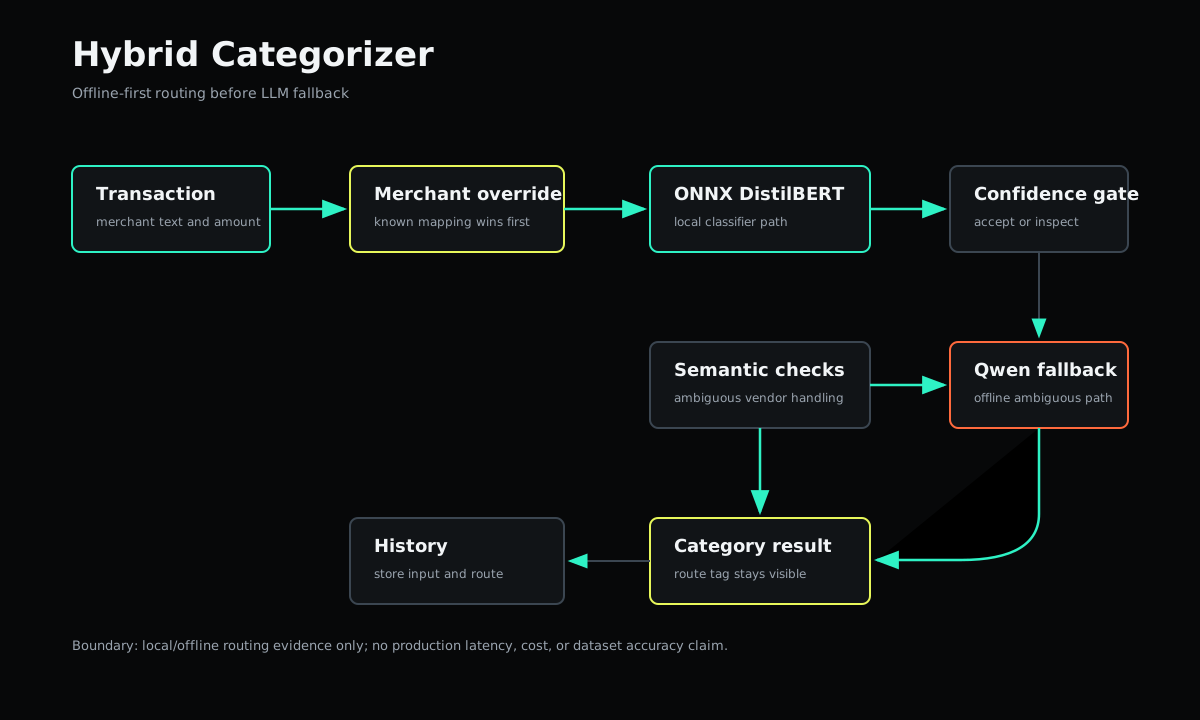
Hybrid categorizer routing diagram showing merchant override, ONNX DistilBERT, confidence gate, semantic checks, and Qwen fallback
Routing diagram Generated from Hybrid architecture docs and backend source inspection.
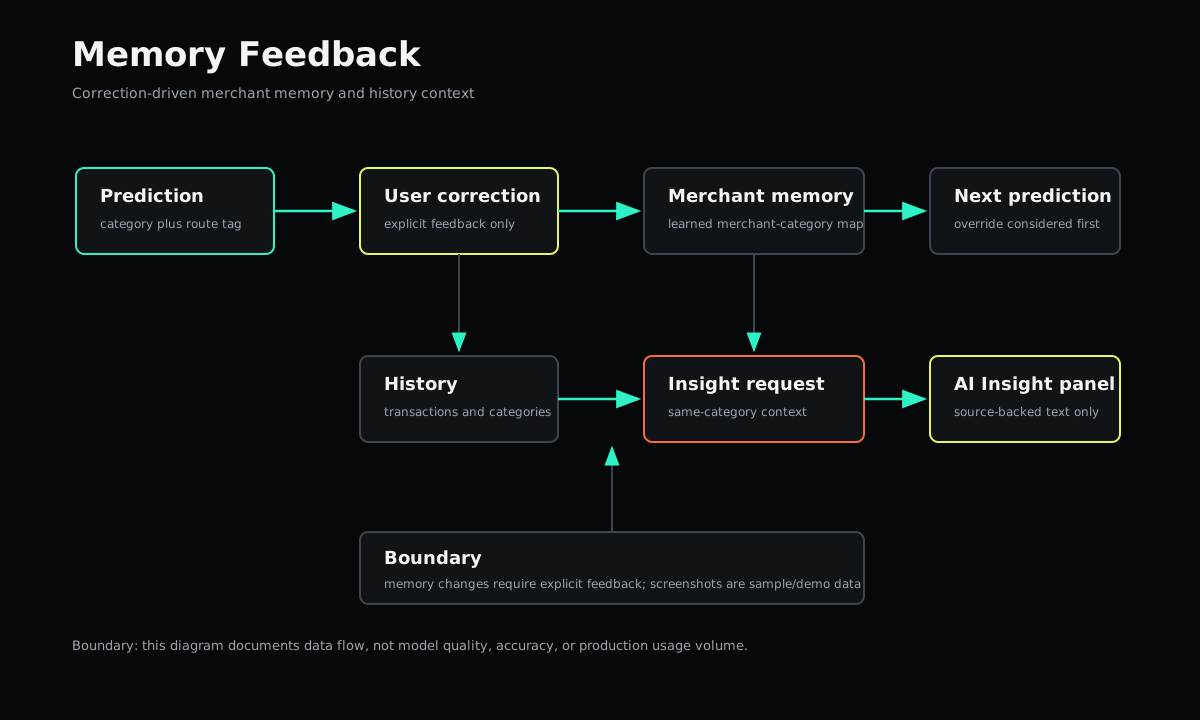
Hybrid categorizer memory feedback diagram showing prediction, correction, merchant map, history, and insight flow
Memory feedback diagram Shows correction and merchant-memory boundaries.
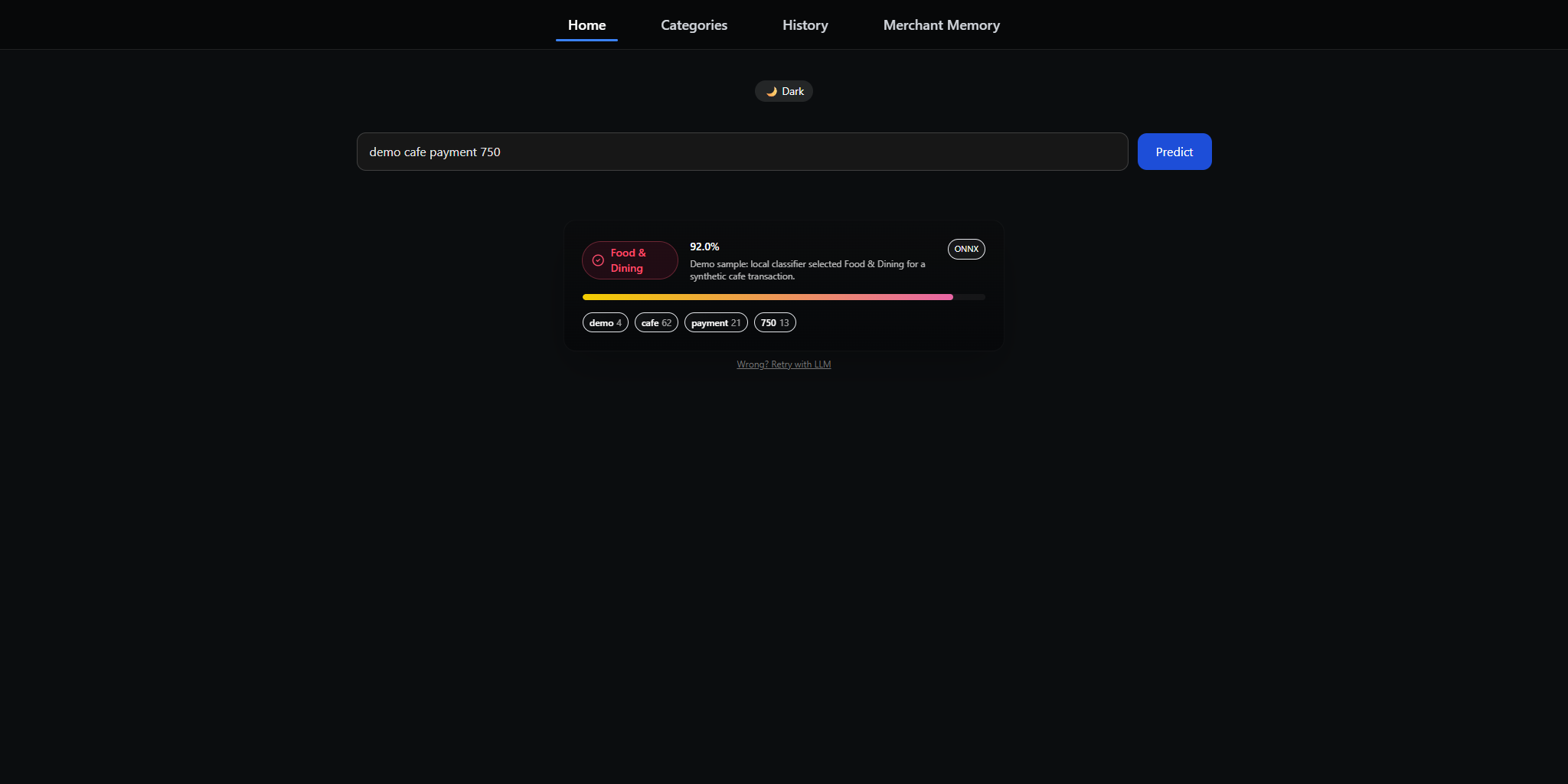
Prediction flow screenshot
Prediction flow screenshot Synthetic sample input UI proof; not model-quality proof.
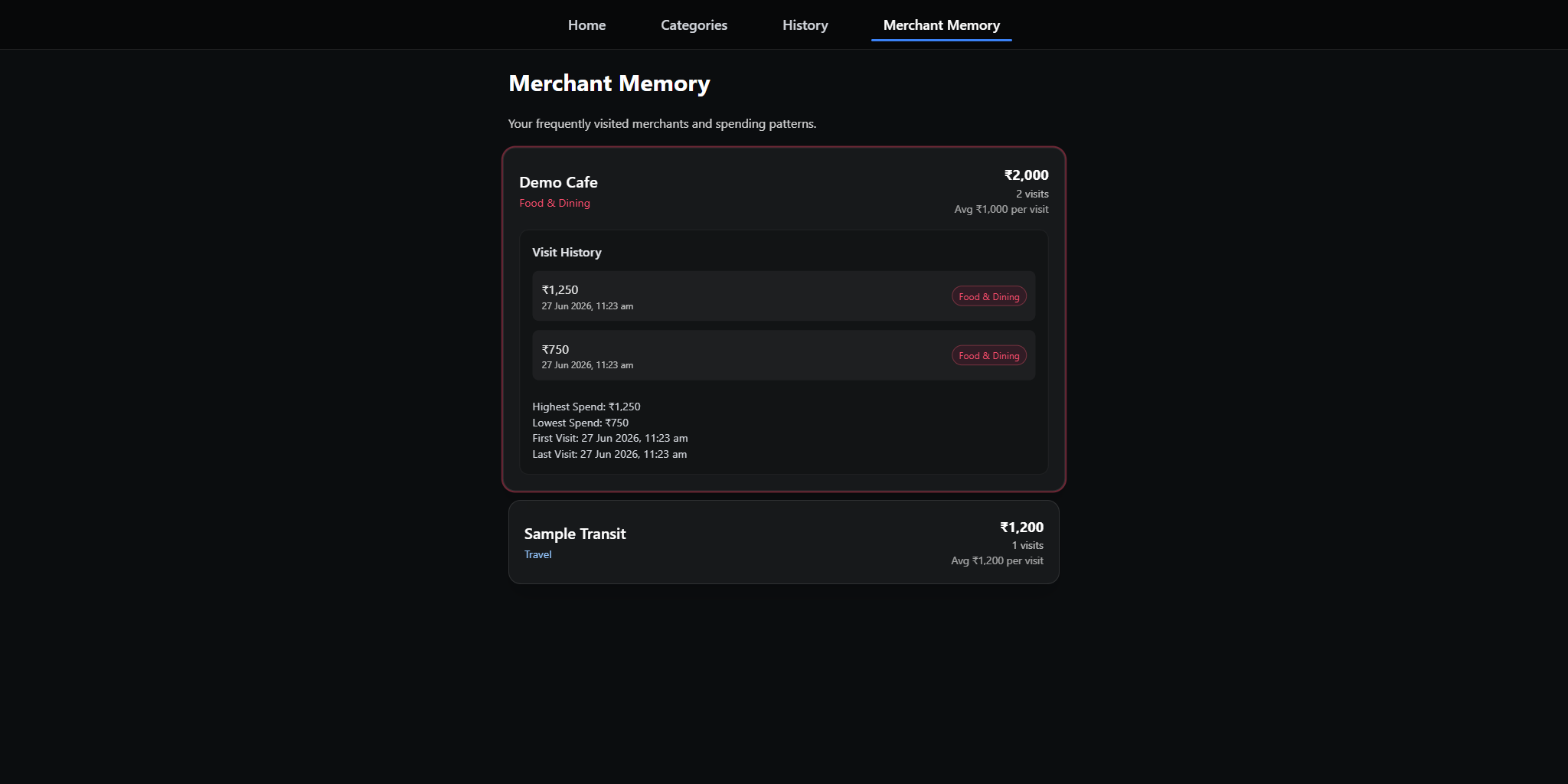
Merchant memory screenshot
Merchant memory screenshot Synthetic merchant-memory view; not usage metrics or model-quality proof.
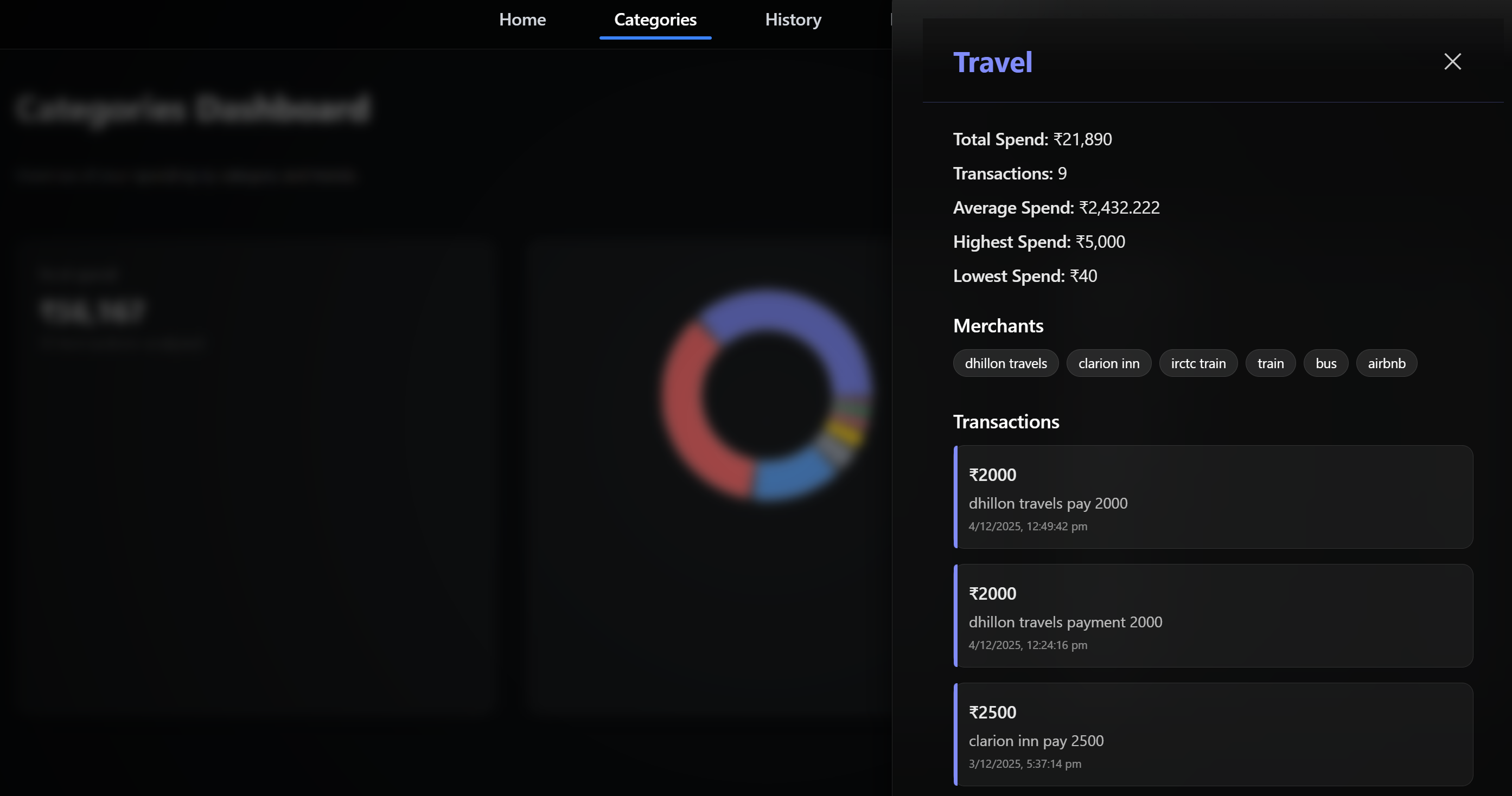
Category detail screenshot
Category detail screenshot Case-study support only. Visible merchants, dates, and amounts are sample/demo data.
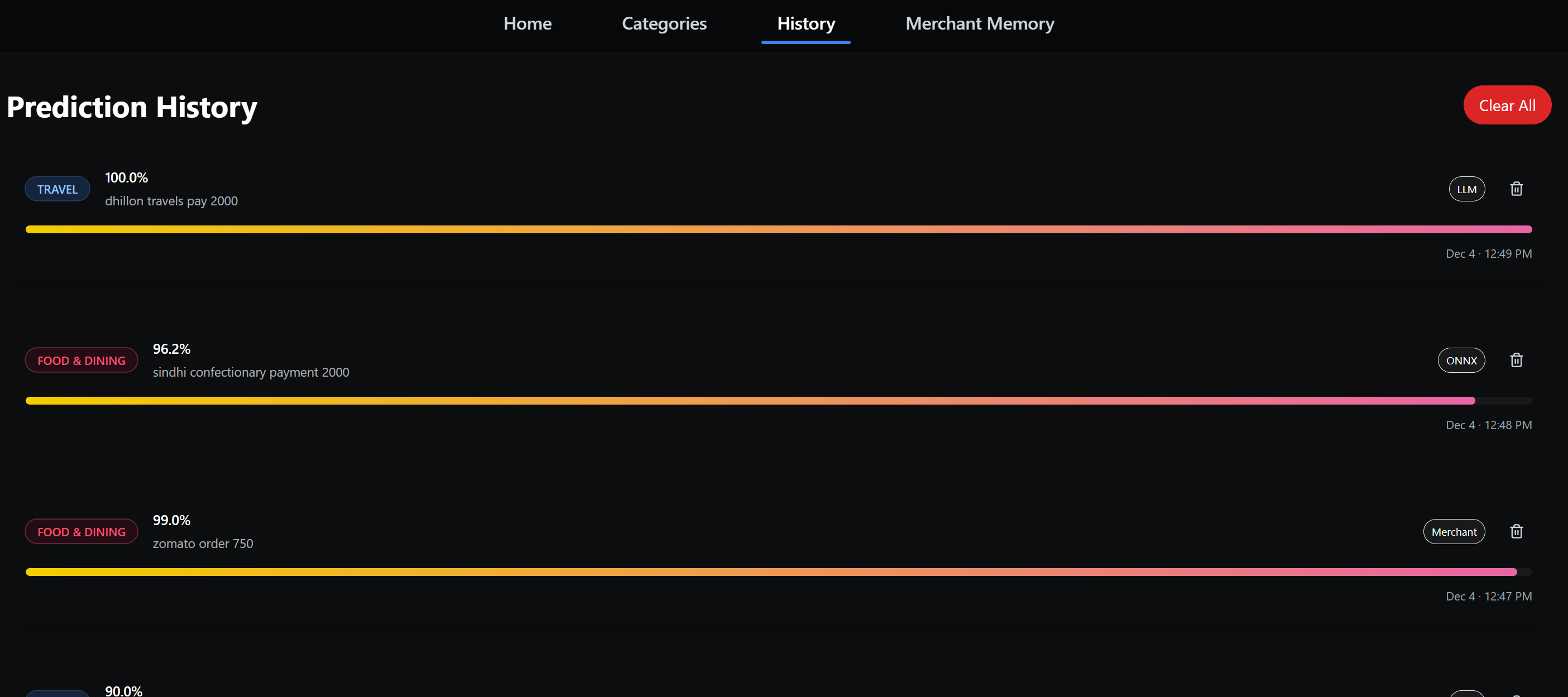
History screenshot
History screenshot Shows transaction history and route tags; does not show the slide-in AI Insight panel.
01 / Build

What exists

What I built

  • Offline-first transaction categorizer with merchant overrides and ONNX DistilBERT inference.
  • Qwen2.5 GGUF fallback for ambiguous or low-confidence inputs.
  • Feedback, history, AI insights, and merchant-memory behavior.

Architecture

  • Known merchants can bypass inference.
  • Confident local ONNX results return without an LLM call.
  • Low-confidence or semantically ambiguous inputs route to offline Qwen fallback.
  • Frontend history and memory keep ambiguity visible to the user.
02 / Ownership

Solo Full-Stack AI Systems Builder

Atishay Jain built the full-stack offline-first AI categorization system end-to-end, including backend, frontend, local routing, merchant memory, history, AI insights, and benchmark evidence.

Contribution

  • Built the UI/API path for categorizing transactions from known merchants and ambiguous vendors.
  • Implemented merchant memory, local ONNX routing, fallback routing, history, and AI insights.
  • Chose an offline/local model strategy because the hackathon constraint required local execution.

Collaborative scope

  • Solo project; public copy may say full-stack, solo, and end-to-end because Atishay Jain confirmed ownership.
  • Benchmark copy stays scoped to local endpoint and CPU-only fallback evidence.
03 / Decisions

Engineering judgment

Key decisions

  • Prefer deterministic merchant overrides before model inference.
  • Use ONNX classification as the local path without treating every prediction as trustworthy.
  • Reserve merchant learning for explicit feedback so first-token mappings do not pollute memory.

Proof highlights

  • GitHub repo and YouTube walkthrough are Verified.
  • POST /predict was validated locally with merchant override and offline Qwen fallback examples.
  • History AI Insight is source-code-backed through POST /transaction-insight.
  • Backend tests cover 27 assertions in backend/tests/test_predict.py.
Endpoint and fallback proof captured

Local classifier/routing benchmark only

Local CPU-only endpoint and offline Qwen fallback evidence from port 8001. This is not a production SLA, hosted deployment claim, dataset accuracy claim, or zero-compute-cost claim.

InputCategoryUsedConfidenceTime
zomato order 500Food & Diningmerchant_override0.990.01s
bittu coaching 500Educationllm_fallback0.8012.54s
random unclear transaction xyz 729Othersllm_fallback1.005.14s
upi transfer to kavya trip snacks 730Food & Diningllm_fallback0.9011.70s
uber ride 240Travelmerchant_override0.990.01s
airtel bill 999Bills & Utilitiesmerchant_override0.990.01s
Boundary

What this evidence does not claim

Local/offline benchmark evidence only; this is not hosted production latency or dataset-level accuracy proof.

  • Confidence threshold tuning affects fallback frequency and correctness.
  • Measured values are local CPU-only runs, not hosted production latency.
  • Owner-observed local CPU-only/offline testing suggests ~60-80s to ~5-13s fallback improvement; not a formal benchmark or production SLA.
  • The current History screenshot does not show the opened insight panel.